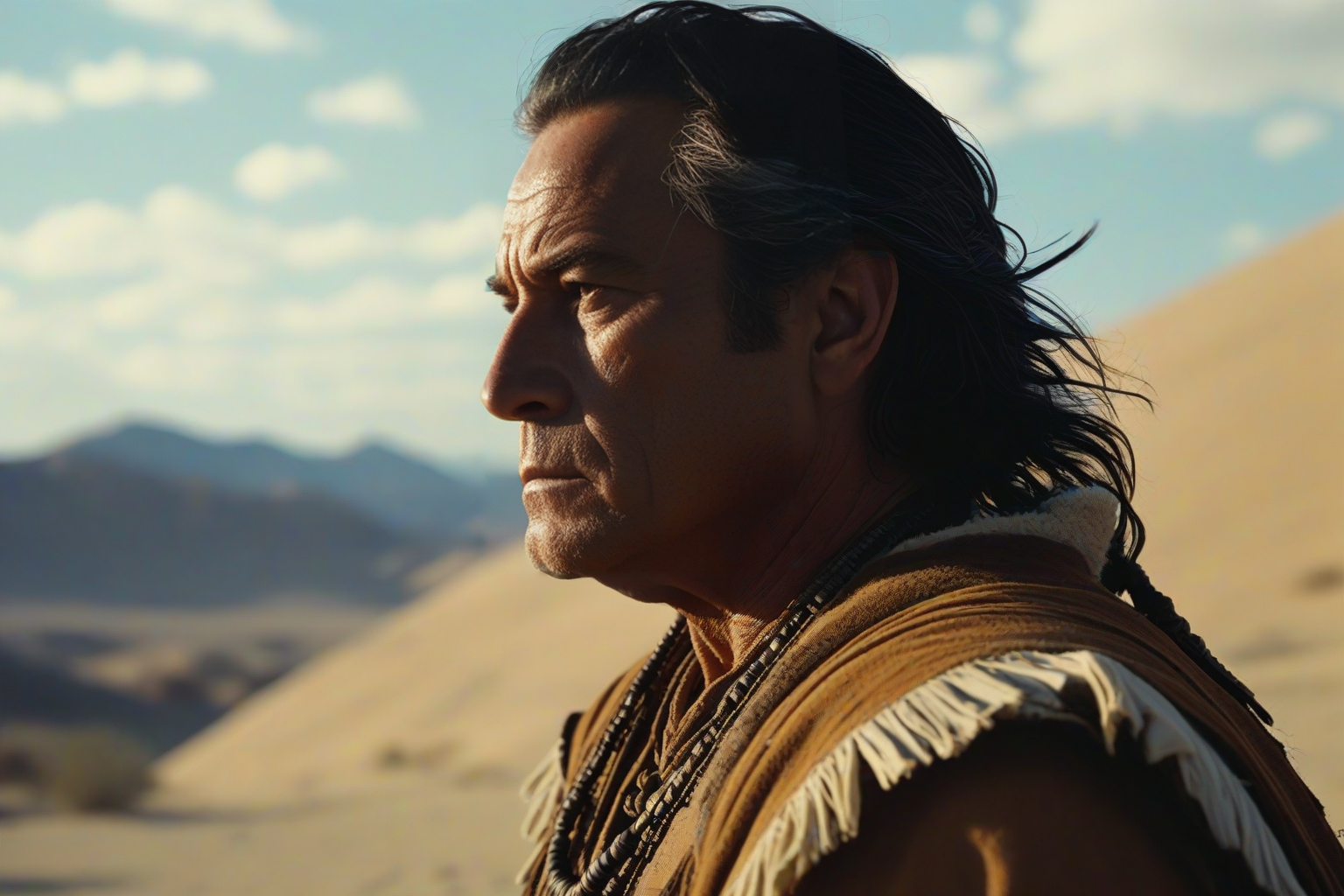
1. **Full Name**: Tatanka Iyotake, known as Sitting Bull, was a Hunkpapa Lakota leader who played a significant role in the resistance against United States expansion into Native American territories during the 19th century.
2. **Birthplace and Date**: He was born around August 1831 (the exact date is unknown) near the Grand River in present-day South Dakota, USA. His tribe moved to the Great Plains later.
3. **Significant Event**: Sitting Bull became famous for leading the Native American forces against Lieutenant Colonel George Custer at the Battle of the Little Bighorn in 1876, a significant victory often referred to as “Custer’s Last Stand.”
4. **Surrender and Death**: Despite his victory at the Little Bighorn, Sitting Bull surrendered two years later following the Nebraska campaign. He was killed by Indian Agency police during an attempt to arrest him in December 1890 due to suspicions that he was conspiring with other Native leaders against U.S. authorities.
5. **Cultural Impact**: Sitting Bull is revered as a symbol of Native American resistance and sovereignty. His legacy continues to influence contemporary Native American art, literature, and politics. He’s also recognized in popular culture, notably through the 1959 film “Sitting Bull,” starring actor Anthony Quinn.
Text model: granite3.2
Image model: WildHorizonXL

The Neural Navigator is a creative mind behind the lens of AI-generated images.
The Neural Navigator is always pushing the limits of what’s possible in this exciting new frontier of digital creativity. Whether it’s surreal landscapes, abstract patterns, or striking portraits, each image is a testament to the endless potential of AI-driven art.
Follow The Neural Navigator for a daily dose of innovative and visually stunning AI-generated imagery.
